Dr. Yu-Ping Lin

Dr. Yu-Ping Lin
Position:Assistant Professor
Science Group:Biomedical technology group
Research Interests:Calcium Signaling Pathway, Immunology, Cancer Biology
E-mail:z11308007@ncku.edu.tw
Room:89902
Room Tel:+886-6-2757575#58233
Laboratory Tel:+886-6-2757575#58234#913
| School | Department | Country | Degree | Period |
|---|---|---|---|---|
|
National Cheng Kung University |
Institute of Basic Medical Sciences | TW | Ph.D. | 2004~2011 |
| National Cheng Kung University |
Department of Environmental and Occupational Health |
TW | Master | 2000~2002 |
| Institute | Position | Period |
| Department of Biotechnology and Bioindustry Sciences, National Cheng-Kung University | Assistant Professor | 2024.08~present |
| The National Institute of Environmental Health Sciences | Research fellow | 2020~2024 |
| Oxford University | Postdoc | 2013~2019 |
Research Interests
Yu-Ping investigates the critical role of calcium signaling in cellular processes, with a particular focus on cancer progression. Her research examines how store-operated calcium channels in the cell membrane influence cellular behavior. By exploring the intricate relationship between these channels and associated signaling pathways, she aims to uncover the mechanisms underlying cancer development.
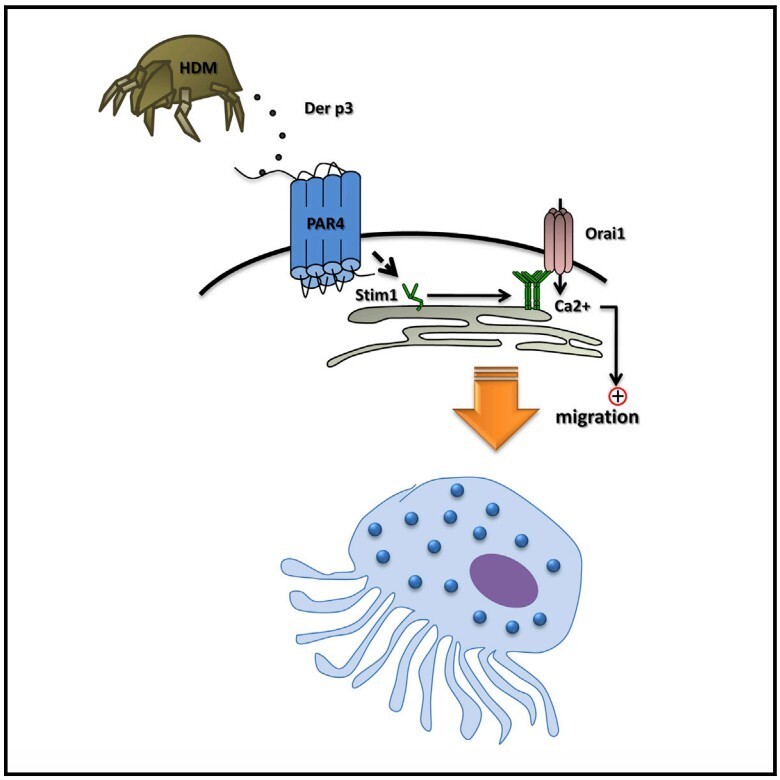 |
House dust mites are a primary source of airborne allergens for humans. Research by Lin et al. has shown that mite extracts trigger calcium channel activation in asthma-related cells through PAR4 receptors. This process is driven by the allergen Der p3, a serine protease. Targeting both Der p3 and calcium channels has been shown to reduce cell activation. |
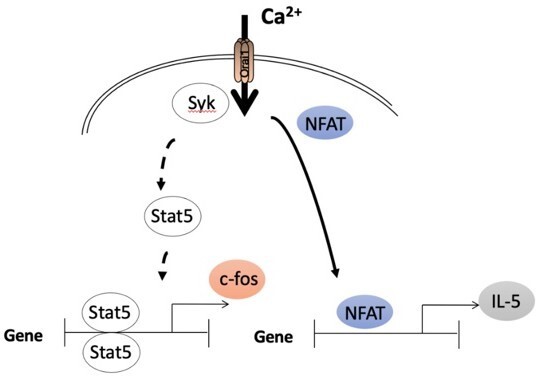 |
Cells regulate calcium levels using specialized channels made of STIM and Orai proteins. Two transcription factors, NFAT1 and c-fos which selectively activate downstream genes in response to calcium. NFAT1 is more sensitive to calcium than c-fos. The number and activity of these calcium channels determine which genes are turned on and how strongly. |
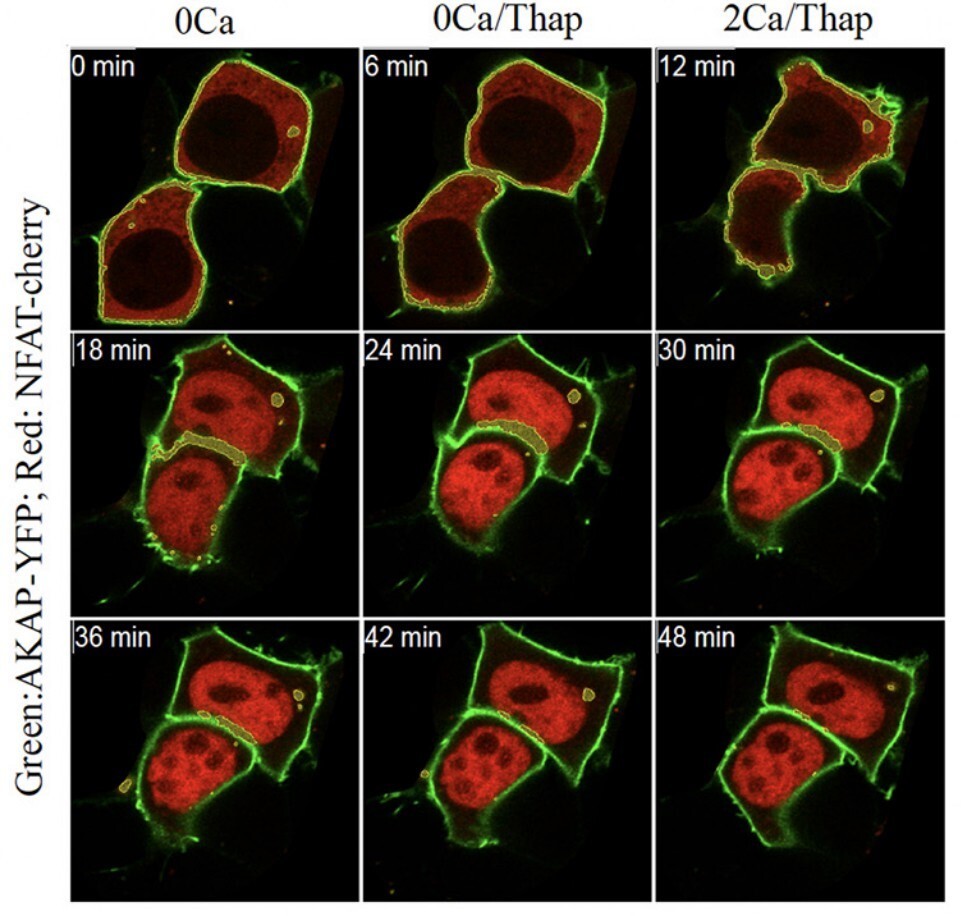 |
AKAP79 brings together key molecules at the cell surface. When calcium enters the cell, these molecules work together to activate a gene controller called NFAT1. We found that AKAP79 constantly replaces old molecules with new ones to keep this process going. This helps sustain the cell's response to calcium signals. We created a mathematical model to understand how this works. |


.svg.png)