Dr. Yi-Min Chen

Dr. Yi-Min Chen
Position:Associate Professor
Group:Agriculture & Aquaculture technology group
Research Interests:Marine Microbiology, Applied Phycology
E-mail:cohen@mail.ncku.edu.tw
Room:89804
Room Tel:+886-6-2757575#58217
Laboratory Tel:+886-6-2757575#58224#812
Education
|
School |
Department |
Country |
Degree |
Period |
|---|---|---|---|---|
|
National Taiwan University |
Institute of Oceanography |
TW |
Ph.D. |
|
|
Institute |
Position |
Period |
|
Department of Biotechnology and Bioindustry Sciences, National Cheng-Kung University |
Associate Professor |
2015~now |
|
Department of Biotechnology and Bioindustry Sciences, National Cheng-Kung University |
Assistant Professor |
2010~2015 |
|
Department of Biotechnology and Bioindustry Sciences, National Cheng-Kung University |
Project Assistant Professor |
2007~2010 |
|
Department of Biotechnology and Bioindustry Sciences, National Cheng-Kung University |
Postdoctoral Fellow |
2006~2007 |
Research Interests
There are two major research fields in our laboratory: one is applications of marine microorganisms, including 1. how to use marine microalgae and bacteria to treat high-salt organic wastes, such as wastewater from vegetable pickling production or condensed molasses fermentation soluble 2. aquaculture, including development of live preys and green water system 3. Microalgae as healthy ingredients for functional foods 4. New medicine. The other is basic researches covering microbial biotechnology, physiology and behavior, such as 1. Research on gene transfer and mutation technologies for Thraustochytrids to improve their ability to produce highly unsaturated fatty acids 2. Thraustochytrid microbial social behavior and diphasic growth behavior 3. symbiotic interactions between Pichochlorum (marine microalga) and marine bacteria i.e. flavobacterium and rhodobacterium, followed by the production of antivibrio activity.
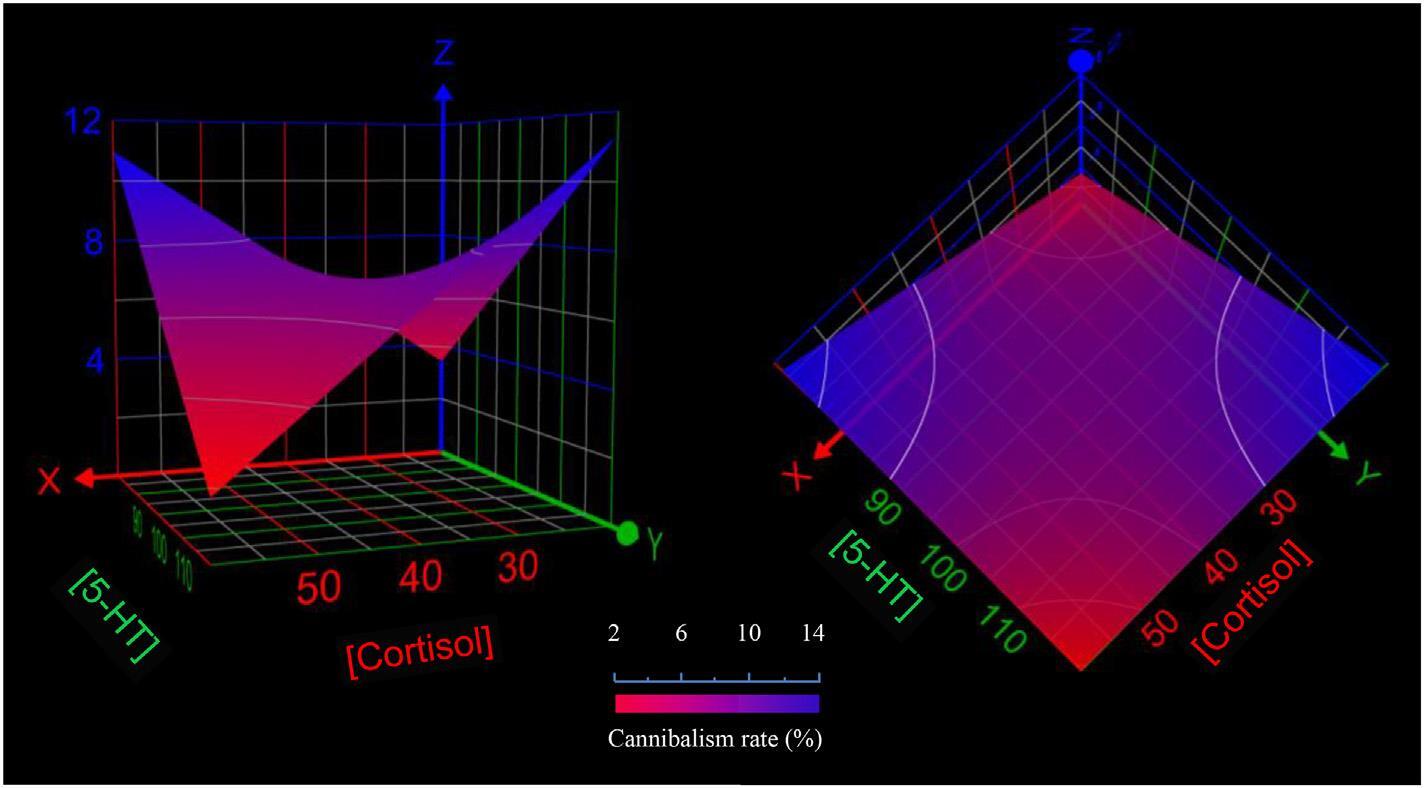 |
Aurantiochytrium strain BL10 is rich in highly unsaturated fatty acids (HUFAs), particularly docosahexaenoic acid (DHA). Previous research has shown that adding 2% of dry BL10 powder to increase the DHA content of feed for orange-spotted grouper (Epinephelus coioides) does not benefit growth but can significantly reduce size discrepancies between individuals and thereby potentially decrease the chance of cannibalism. To understand whether a 2% BL10 supplement can really reduce the cannibalism rates of E. coioides, whether increasing the BL10 dosage can reduce the cannibalism rates of E. coioides even further, and how the BL10 supplements affect cannibalistic behavior, we produced four isonitrogenous and isolipidic experimental diets dosed with different weight percentages (0, 2, 4, 6%) BL10 meal and fed it to E. coioides fingerlings (total length 3.8 ± 0.3 cm) for two weeks. During the feeding period, cannibalism in the experiment groups were observed. After the feeding period, we analyzed the brain fatty acid composition, brain 5-hydroxytryptamine (5-HT) levels, and serum cortisol levels in the experiment groups and used regression analysis to examine the relationships among these biochemical variants and cannibalism rates. The results indicate that 2–6% BL10 supplements, particularly 2% BL10 supplement, could significantly reduce the cannibalism rates of E. coioides. The BL10 supplements increased the proportions and contents of HUFAs in the brains of E. coioides, increased brain 5-HT levels, and reduced serum cortisol levels. The results of univariate linear regression indicated that the serum cortisol level exhibited a significant negative correlation with brain HUFA content, particularly arachidonic acid (ArA). Whereas, brain 5-HT was positively correlated with the ratio of n-3/n-6 fatty acids in the brain. Subsequent multivariate linear regression demonstrated that cannibalism is affected by serum cortisol, brain 5-HT levels and their interaction. Our results provide new insight into the physiological regulation mechanisms behind the cannibalistic behavior of teleost and provide a feasible solution at the same time. |
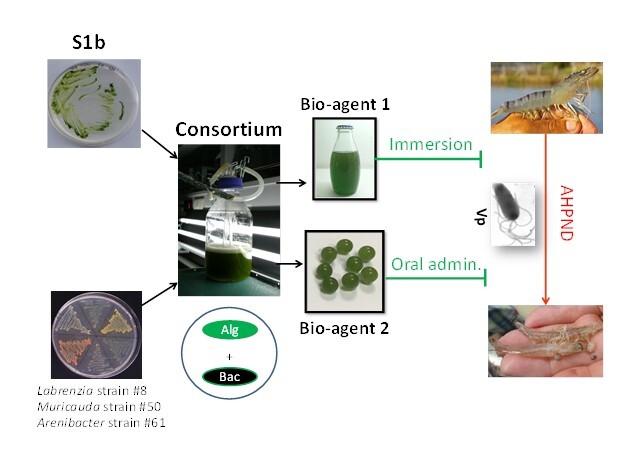 |
Co-culturing microalgae Picochlorum strain S1b with bacterium isolated from non-axenic S1b cultures (i.e., Labrenzia sp. strain #8, Muricauda sp. strain #50, or Arenibacter sp. strain #61) can provide growth inhibitory effects against Vibrio harveyi and/or Vibrio campbellii. To determine whether this strategy can also provide growth inhibitory effects against Vibrio parahaemolyticus and thus help control acute hepatopancreatic necrosis disease (AHPND) in shrimp, this study compared the ability of various microalgal-bacterial consortia (S1b+#8, S1b+#50, S1b+#61, and S1b+#8, #50, #61) to inhibit the growth of V. parahaemolyticus. The challenge tests were then performed to determine whether the identified microalga-bacterial consortium can increase the survival of shrimp infected with AHPND-causing V. parahaemolyticus. The results revealed that only S1b+#8, #50, #61 (S1b+all) significantly inhibited V. parahaemolyticus growth. For this consortium, both feeding (0.8% of shrimp body weight/day) and immersion (10–100 mL microalgal-bacterial co-culture/30 L tank water/day) methods conferred protective effects, thereby demonstrating that the S1b+all has the potential to improve AHPND control. Of the two methods, feeding was found to be more suitable for the outdoor cultivation of juvenile shrimp, whereas immersion was found to be suitable for the indoor cultivation of shrimp postlarvae. |
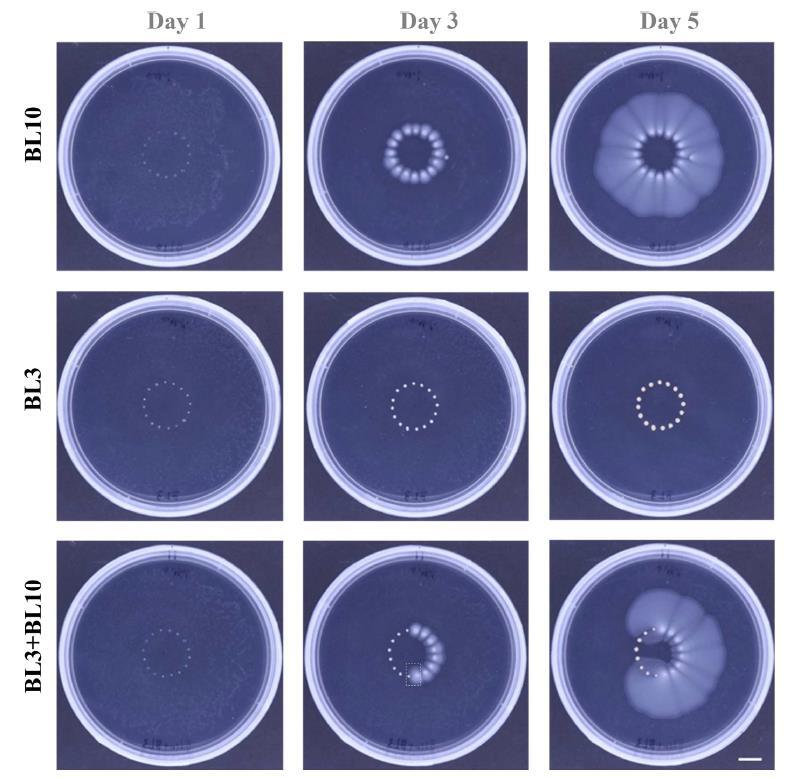 |
The current study investigated the potential functions of amoeboid cell formation and migration in a thraustochytrid strain, Aurantiochytrium limacinum BL10. Our results showed that: (1) When the surface of an agar plate was inoculated with BL10, amoeboid cells mainly emerged on the periphery of isolated colonies. The amoeboid cells then migrated outwards to form small vegetative cell clusters, which favored rapid colony expansion. In addition, amoeboid cells were capable of self-recognition (i.e. they were able to distinguish BL10 from other thraustochytrid species), and could choose whether to evade (self colonies) or approach (non-self colonies). These observations indicated that amoeboid cells were employed by BL10 to help colonize empty territories and to outcompete other thraustochytrid species in previously colonized territories. (2) When the agar medium was soft, amoeboid cells were able to penetrate the surface and migrate throughout, thereby allowing BL10 to colonize the interior of the solid matrix. This finding suggested that amoeboid cell formation and migration may help Aurantiochytrium colonize the interior of solid matrices to obtain additional nutrients and spatial resources. The mechanisms underlying the regulation of amoeboid cell formation and migration as well as the extraordinary microbial social behaviors of BL10 are also discussed in this article. |


.svg.png)