Dr. Ching-Chun Chang

Dr. Ching-Chun Chang
Position:Professor
Group:Agricultural Biotechnology
Research Interests:Plant Organellar Genomes, Organellar Gene Regulation, Genome Editing
E-mail:chingcc@mail.ncku.edu.tw
Room:89707
Room Tel:+886-6-2757575#58215
Laboratory Tel:+886-6-2757575#58214#711
Education
|
School |
Department |
Country |
Degree |
Period |
|---|---|---|---|---|
|
Cornell University |
Plant Biology |
U.S.A. |
Ph.D. |
|
Institution |
Position |
Period |
|---|---|---|
|
National Cheng Kung University |
Professor |
2020.08 ~now |
|
National Cheng Kung University |
Associate Professor |
2009.08 ~ 2020.07 |
|
National Cheng Kung University |
Assistant Professor |
2002.08 ~ 2009.07 |
|
National Ping Tung University of Science and Technology |
Assistant Professor |
2001.08 ~ 2002.07 |
Research Interests
Chloroplasts and mitochondria are very important organelles in plants, where photophosphorylation and oxidative phosphorylation for the production of chemical energy are taking place, respectively. In addition, many biochemical pathways such as those involving the biosynthesis of hormones and amino acids occur in the organelles. We are interested in studying the genomes of plant organelles (e.g. chloroplasts and mitochondria), the organellar genome editing, the organellar gene expression and regulation, and the comparative analysis of organellar genomes. The results derived from the above-mentioned research areas could be applied not only to develop novel horticultural traits and serve as molecular markers, but also have potential application in the synthetic biology of organelles. In addition, plant nuclear transformation technology has been widely used not only to create the novel agricultural traits in crops to increase yields and product quality, but also been used to generate plants as bioreactors for the production of industrial proteins or metabolites. The advantages of plant molecular faming are easy in scale up, low cost of production and free contamination of animal pathogen. We also take advantage of plant transformation technology to produce useful foreign proteins or enzymes in plants for various biotechnological applications such as vaccine and bioenergy.
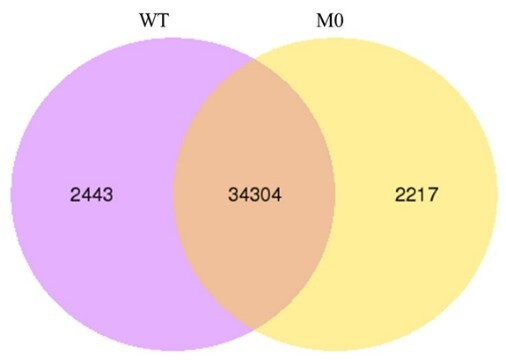 |
Sample 1 Two sets of RNA polymerase (RNAP), nucleus (NEP)- and plastid (PEP)-encoded polymerases, recognizing distinct promoters exist in the chloroplasts of higher plants. We applied chloroplast-targeted transcription activator-like effector nuclease technology to cause double-strand DNA breaks in the rpoB gene of tobacco, which encodes the β-subunit of PEP. The repair of damaged DNA through microhomology-mediated recombination caused the functional loss of the rpoB operon, and resulted in the heterotrophic growth of an albino plant. Genome-wide analysis of gene expression in the leaf tissue of PEP-deficient tobacco (M0) by RNA-Seq was conducted, and compared it with that of wild-type plants. The expression of NEP genes was up-regulated in PEP-deficient tobacco. Alongside most housekeeping genes, NEP plays a critical role in the regulation of gene expression involved in photosynthesis. In contrast, alongside the photosynthesis-related genes, PEP plays an important role in the regulation of gene expression involved in housekeeping functions. Moreover, the copy number of mitochondrial DNA and the level of most mitochondrial protein-coding transcripts were slightly increased in PEP-deficient tobacco. The disruption of PEP function not only affected plastid gene expression, but also the expression of nuclear and mitochondrial genes. Our study demonstrated the intercompartmental retrograde signaling in the regulation of gene expression. |
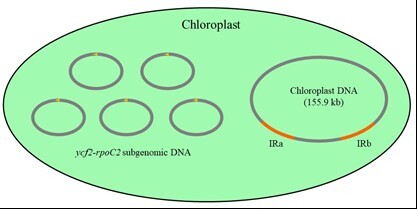 |
Sample 2 Transcription activator-like effector nuclease (TALEN) technology has been widely used to edit nuclear genomes in plants but rarely for editing chloroplast and mitochondrial genomes. In addition, ciprofloxacin, commonly used to cause the double-strand DNA break for studying the repair mechanism of organellar genomes in plants, confers no organellar selectivity and site-specificity. To demonstrate the feasibility of TALEN-mediated chloroplast DNA editing and to use it for studying the repair mechanism in chloroplasts, we developed a TALEN-mediated editing technology fused with chloroplast transit peptide (cpTALEN) to site-specifically edit the rpoB gene via Agrobacteria-mediated transformation of tobacco leaf tissues. Transgenic tobacco plants showed various degrees of chlorotic phenotype. Repairing damaged chloroplast DNA resulted in point mutation, small inversion and large deletion surrounding the rpoB gene by homologous recombination and/or microhomology-mediated recombination. In an albino line, microhomology-mediated recombination via a pair of 12-bp direct repeats between rpoC2 and ycf2 genes generated the chimeric ycf2-rpoC2 subgenome, with the level about 3- to 5-fold higher for subgenomic DNA than ycf2 gene. The ycf2-rpoC2 subgenomic DNA might independently and preferentially replicate in plastids. Further investigation to identify the novel replication origin for the application in the chloroplast synthetic biotechnology is proposed. |
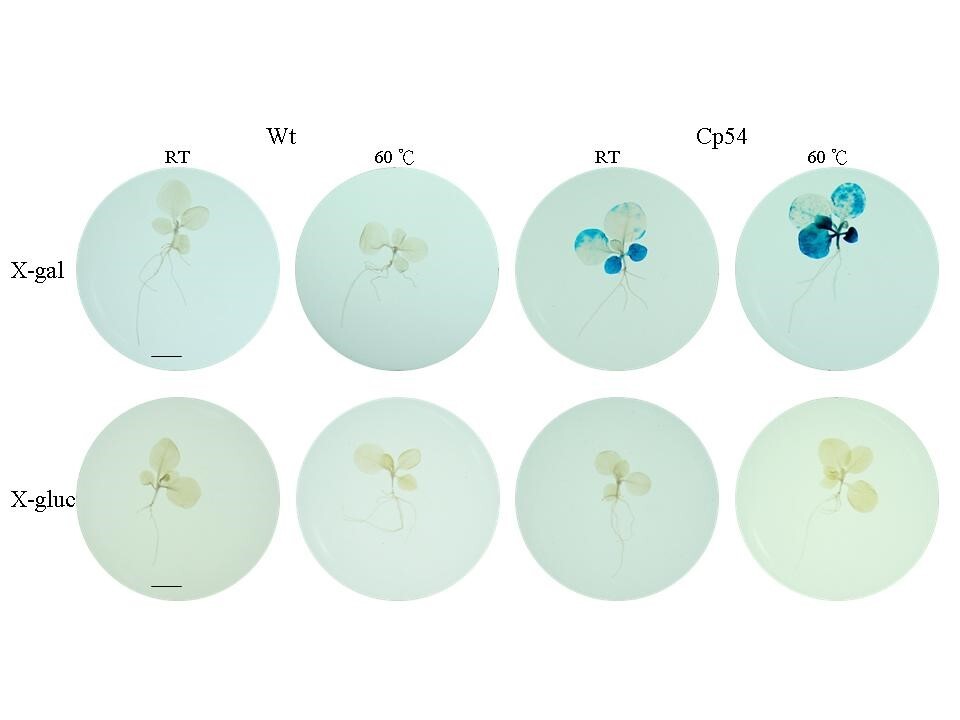 |
Sample 3 The β-glucosidase hydrolyzes the β(1-4) glucosidic linkage of disaccharides, oligosaccharides and glucose-substituted molecules. Currently, the commercial source of β-glucosidase is mainly from microbial fermentation. Plants have been developed as bioreactors to produce various kinds of proteins including β-glucosidase because of the potential low cost. Sulfolobus solfataricus, a thermoacidophilic archaeon grow optimally at high temperature (~80 °C), and pH 2-4. We overexpressed the β-glucosidase gene of S. solfataricus in transgenic tobacco. Three transgenic lines with β-glucosidase gene expression driven by the rbcS promoter were obtained, and the recombinant proteins were accumulated in chloroplasts, ER and vacuoles up to 1%, 0.6% and 0.3% of total soluble protein, respectively. The plant-expressed β-glucosidase had optimal activity at 80 °C and pH 5-6. In addition, the plant-expressed proteins showed high thermostability; upon heat pre-treatment at 80 °C for 2 h, approximately 70% residual activity remained. Furthermore, wind-dried leaf tissues of transgenic tobacco showed good stability in short-term storage at room temperature, with enzymatic activity of about 80% still remaining after 1 week of storage as compared with fresh leaf. Furthermore, based on alternative β-galactosidase activity, we demonstrated the possibility of using the archaebacterial β-glucosidase gene as a reporter in plants. |


.svg.png)